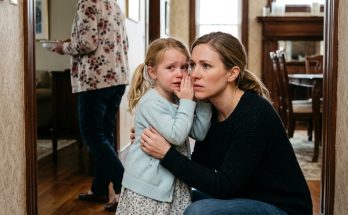
My father whispered, “Why is that here?”
“Because,” I said, “this family has confused need with entitlement before.”
Daniel lowered his head. My mother covered her mouth.
My father opened his, but no argument came out. He had no spreadsheet language left for a room full of doctors, records, and the daughter he had once told to think long-term.
I picked up the pen.
My hand did not shake. That surprised me.
I expected rage, but what I felt was colder and sadder: the knowledge that Emma was gone no matter what
I did next.
“I am not doing this for you,” I told my parents.
My mother started crying harder.
I looked at Daniel. “And I am not doing it because what happened was acceptable.
It was not. You all made a choice.
Emma paid for it.”
Daniel’s voice cracked when he said, “I know.””
I did not know whether he meant it fully. I did not know whether fear had made him honest or merely softer.
But the admission mattered less than the truth behind it. Emma would never be saved by anyone’s regret.
I signed because I could survive helping him better than I could survive becoming my father.
That was the line I found in myself, and it was not clean. It did not make me noble.
It made me able to sleep.
The donation process was exhausting, clinical, and strange. There were more forms, more blood draws, more explanations.
My parents tried to thank me several times. Each time, I told them the same thing: gratitude was not the same as repair.
Daniel received the transplant.
Recovery was uncertain for months, then cautiously hopeful. I did not visit often.
When I did, I stayed for medical updates, not family healing ceremonies. Some wounds do not become bridges just because people regret building them.
My father wrote me a letter six weeks later.
For once, he did not mention security or assets. He wrote Emma’s name.
He admitted the house. He admitted the email.
He admitted that calling her care a waste was unforgivable.
I read it twice, then put it in a box with the binder. I did not answer right away.
Forgiveness, if it ever comes, is not a coupon people redeem because they finally understand the price.
Caleb and I still have Emma’s tree. Every spring, it blooms.
Some mornings I stand beneath it with coffee warming my hands, and I remember the waiting room in Seattle, the chart, the folder, my mother’s bruising grip on my father’s arm.
I remember that the first time my mother called me after four years of silence, she was not calling to apologize for letting my little girl die. She was calling because the son they chose over her was suddenly the one running out of time.
And I remember the lesson Emma left me, though she was too young to know she was teaching it: saving someone does not erase what they did.
Sometimes it only proves you were never the person they tried to make you become.
THE END.